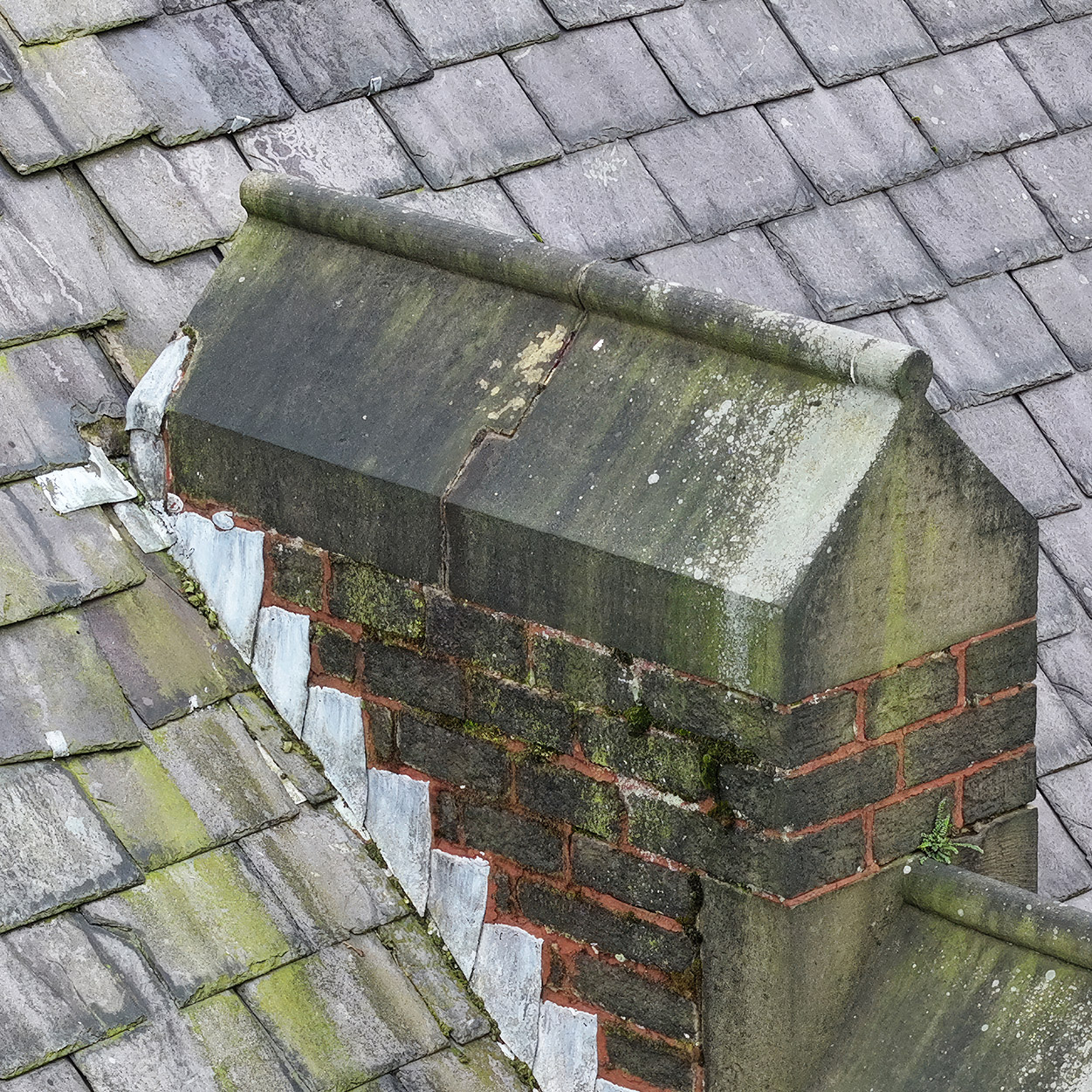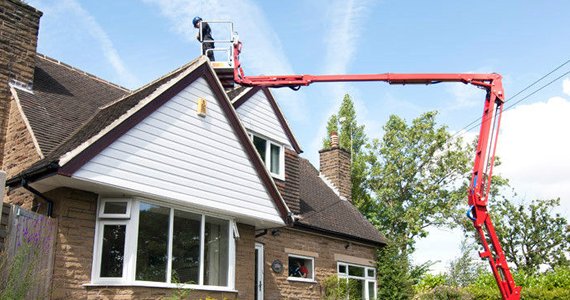
Tell us about your Raynes Park property — a 1920s or 1930s hipped semi on Grand Drive, West Barnes, Bushey Road, or the surrounding streets; a property with a garage roof or lean-to flat roof section that needs assessing alongside the main roof; or a property where patching has not resolved recurring water ingress and the end-of-life question needs settling. Price confirmed from £195 by phone immediately.
Our specialist assesses every element specific to Raynes Park’s inter-war hipped semi stock. Concrete tile: porosity testing at multiple sample points across each slope. Hip mortar: every hip run accessed by ladder — bed condition, tile security, and open joints identified. Felt underlay and battens: loft inspection for lap failure and moisture damage. Flat roof sections: garage roof, lean-to, and rear extension membranes assessed for age-related failure. Chimney: lead flashing condition and clay movement effects.
Full written report with photographs, condition ratings, remaining service life estimates, and a prioritised costed action list. The key verdict every Raynes Park homeowner needs: patch or replace — established from porosity testing and felt condition, not from a ground-level opinion. Hip mortar: each run assessed, urgency rated. Flat roofs: membrane condition and urgency. Pre-purchase reports with programme costs for negotiation. Report within 48 hours.
Raynes Park is one of south-west London’s most distinctive inter-war suburbs — distinctive not because it is architecturally varied, but because it is so remarkably uniform. The area developed almost entirely in the 1920s and 1930s following the expansion of the railway and the growth of the suburban commuter market. The streets between Raynes Park station and Wimbledon Chase are lined with near-identical semi-detached houses: hipped concrete tile roofs, front bay windows, side access gates, small front gardens, and mature trees now 80 to 100 years old. The SW20 postcode and the SM4 border cover this stock. The London Borough of Merton is the planning authority.
The uniformity of Raynes Park’s housing stock means its roofing challenges are also uniform. Every inter-war semi in the area has the same roofing problem to a greater or lesser degree: concrete tile at 85 to 100 years old, on a hipped roof design that concentrates mortar loading at the hip junctions, with an original bitumen felt underlay that is at or past the end of its own service life behind the tile surface. What varies between individual properties is where each one sits on the spectrum between “manageable for another 3 to 5 years with targeted maintenance” and “re-roof required within 12 months”. Establishing that position requires close-range assessment that pavement-level inspection cannot provide.
The hipped roof design is the defining feature of the Raynes Park semi and its defining roofing vulnerability. Unlike a gabled terrace, which has a ridge run and two end slopes closed by gable walls, a hipped semi has four slopes converging at hip junctions that run from the ridge down to each corner of the building. Every hip junction carries continuous mortar-bedded hip tiles along a galvanised hip iron for 4 to 5 metres from ridge to eaves. At 85 to 100 years old, these hip mortar beds have been subjected to nine decades of freeze-thaw cycling, the thermal expansion and contraction of the hip iron itself, and on London clay, the seasonal ground movement effects of the mature trees in Raynes Park’s gardens. The cumulative result is systematic hip mortar cracking and bed separation. Individual hip tiles loosen within cracked beds and can be lifted by wind load or detach entirely.
A detached or loose hip tile creates a direct weather ingress path at the most exposed junction of the roof geometry — where two slopes meet at 45 degrees and rain drives along the junction in both directions. Yet hip tiles are typically invisible from pavement level: the junction faces outward and upward, not downward where a pedestrian would see it. Roofers who quote from street level miss hip tile condition routinely. Our surveys access every hip junction by ladder at close range and rate the mortar bed condition and tile security across every hip run.
Alongside the hip mortar question, concrete tile porosity and felt underlay condition determine whether a Raynes Park roof is patchable or at systemic end-of-life. Tiles at 85 to 100 years have undergone full carbonation; their surface porosity is significantly elevated above new tile. The felt underlay behind the tile surface — bitumen felt from the original 1920s or 1930s construction or from a 1960s–70s re-tiling — is typically brittle at the horizontal laps. As the felt fails at its laps, the waterproof barrier shifts from the tile surface to no longer existing across sections of the underlay. Porosity testing at multiple tile sample points across each slope, combined with loft inspection, establishes whether the remaining barrier is the tile surface plus functional felt, or the tile surface alone. The answer determines whether patching individual tiles is effective or merely cosmetic.
Most Raynes Park semis also have flat roof sections added at various points in the 20th century: garage roofs (integral or attached garages are a standard feature of the inter-war semi layout), lean-to side access roofs, and rear extension kitchen or bathroom roofs. Bitumen felt flat roofs from the 1960s through 1980s are now 40 to 60 years old — well past design life. Our surveys include all flat roof sections in the assessment as a matter of course.
Nearby Areas: Inter-war semi surveys across Wimbledon and Merton. New Malden hipped semi stock at New Malden. Motspur Park and Worcester Park coverage at Worcester Park. Wider SW20 coverage at Colliers Wood.
Raynes Park’s inter-war hipped semis present a specific assessment challenge that ground-level and homebuyer surveys cannot meet: hip mortar failure that is invisible from the pavement, and the patch-versus-replace decision on 90-year concrete tile that requires porosity testing and felt inspection, not tile-counting from below. Getting both of these right determines whether the next £10,000 spent on a Raynes Park roof goes into a programme that works, or into patching a systemically failed surface one tile at a time.
A family purchased a 1935 semi-detached house on a residential street off Grand Drive for £680,000. The property had its original concrete tile roof on a hipped four-slope design, plus an attached garage with a 1970s bitumen felt flat roof and a lean-to rear extension. The purchase survey noted “roof showing age-appropriate wear, plan routine maintenance”. No specialist roof survey was commissioned before exchange.
Year 1: Water ingress appeared at the rear bedroom ceiling after a winter storm. A roofer attended, replaced two cracked tiles on the rear slope, and repointed the ridge. Cost: £450. The owner was told the roof was “old but still got life in it”. The ingress appeared to resolve through the following dry summer.
Year 2: Water ingress returned in autumn, this time in two locations — the rear bedroom and a new patch at the front bedroom ceiling. A second roofer attended, replaced four more tiles on the front slope, cleared the gutters, and repointed one section of the rear hip. Cost: £650. The second roofer also noted “some hip tiles a bit loose but nothing urgent”. The owner asked whether the whole roof needed replacing and was told “not yet, another few years in it”.
Year 3: Water ingress now present at three ceiling locations during heavy rain: front bedroom, rear bedroom, and the ceiling of the garage below the flat roof. A specialist assessment was commissioned after the third roofer to attend declined to patch further without a full assessment. Findings:
(1) Concrete tile — porosity test: Testing at nine sample points across the four slopes showed near-uniform high water absorption across the front, rear, and side slopes — consistent with full carbonation at 90 years. The tile surface was providing minimal waterproofing. The original bitumen felt underlay was failing at the horizontal laps across approximately 60% of the rear slope and 40% of the front slope — confirmed by loft inspection under each section. The effective waterproof barrier on these sections was neither tile nor felt. Patching individual tiles had addressed surface symptoms on a roof whose structural waterproofing barrier had already failed. Re-roofing required on the main concrete tile section within 12 months.
(2) Hip mortar — close-range assessment: Of the four hip runs on the property, two (rear-left and front-right, both on the south-west faces receiving prevailing weather) had systematic mortar bed cracking with three hip tiles loose enough to move by hand and one section of approximately 300mm with open joints directly exposed to weather. The hip tile condition had not been assessed in either of the previous two roofer visits. Immediate temporary repair to secure loose tiles and seal open joints recommended before main re-roofing programme.
(3) Garage flat roof: 1970s bitumen felt at approximately 50 years. Surface blistering across 70% of the area, splits at the upstand along the rear wall, ponding in the centre section from inadequate falls. Immediate replacement required — the ceiling below was already showing water staining across a 1.2 sq metre area.
Programme: Main roof re-tiling with new concrete interlocking tile and breathable membrane: £9,500–£12,500. Hip mortar immediate temporary repair: included in re-roofing programme scope. Garage flat roof replacement with GRP: £2,200–£2,800. Total: £11,700–£15,300.
What a Specialist Pre-Purchase Survey Would Have Found: “Concrete tile: porosity testing confirms near-uniform high absorption across all slopes — full carbonation consistent with 90 years. Felt underlay at laps: brittle and failing. Patch repairs will not resolve systemic end-of-life waterproof barrier failure. Re-roofing required within 12–18 months. Budget £9,500–£12,500. Hip mortar: south-west hip runs showing systematic bed cracking with loose tiles; close-range assessment identifies immediate securing required. Garage flat roof: 1970s felt at end-of-life, replacement required within 6 months. Budget £2,200–£2,800. Total programme: £11,700–£15,300. Recommend price negotiation before exchange.”
Survey cost: from £195. Two patch repair visits totalling £1,100 addressed surface tile symptoms while the felt underlay continued to fail and hip mortar continued to open. Pre-purchase specialist assessment would have established the re-roofing requirement and garage flat roof urgency before exchange on a £680,000 purchase.
Roof surveys for Raynes Park properties start from £195. Whether a 1930s hipped semi where the patch-versus-replace decision needs to be made properly from porosity testing and felt inspection, not from a ground-level opinion; a property where repeated patching has not resolved recurring ingress and the hip mortar runs have never been assessed from a ladder; a garage or lean-to flat roof that is overdue for assessment alongside the main tile; or a pre-purchase survey where the full programme scope and cost needs establishing before exchange on a Raynes Park semi — call 07833 053 749 for an exact price confirmed immediately. Report within 48 hours.
Every year that a systemically failed Raynes Park concrete tile roof is patched rather than replaced is another year of wasted repair spend and continued water risk to ceiling finishes and timber structure. Independent porosity testing and loft inspection settles the question definitively. No repairs sold — honest assessment only.
A homebuyer survey on a 1930s Raynes Park semi will note “concrete tile roof showing age” and recommend specialist inspection. It will not establish tile porosity, felt underlay condition at the laps, hip mortar bed condition across all four runs, or the urgency of the garage flat roof. Specialist pre-purchase assessment establishes all four, with programme costs for negotiation before exchange. On a property where re-roofing plus garage flat roof replacement totals £12,000–£16,000, this is the information that makes a £680,000 purchase fully informed.
If water ingress on a Raynes Park semi has returned despite two or more patch repair visits, there are two probable explanations that roofers patching from street level routinely miss. First, the felt underlay may have failed at the horizontal laps — patching surface tiles has no effect on a waterproof barrier failure behind them. Second, hip mortar bed cracking and loose hip tiles on one of the four hip runs may be admitting water at the junction between slopes. Specialist assessment distinguishes between these, identifies the actual source, and determines whether targeted repair can resolve the problem or whether systematic re-roofing is the only effective answer.
Bitumen felt garage roofs and lean-to side access roofs on Raynes Park semis from the 1960s through 1980s are now 40 to 60 years old — typically one or two replacement cycles beyond their design life. Specialist assessment establishes membrane condition, splits and blistering, upstand integrity, and drainage adequacy. Urgency rated: whether replacement is needed before next winter or the roof has a further 2 to 3 years with monitoring. The assessment of the garage roof is included in our standard Raynes Park survey as a matter of course.
The most common question asked by Raynes Park homeowners about their inter-war concrete tile roof is: does it need replacing or can it be patched for a few more years? Roofers have a financial interest in both answers and may give either depending on their current workload. Independent specialist assessment answers this question from objective data — tile porosity measurement at multiple sample points and loft inspection of felt underlay condition — with no interest in the commercial outcome. The answer is the foundation for confident maintenance planning rather than annual uncertainty.
Chimney breast damp on Raynes Park semis near the south-west hips has a compound cause: lead flashing abutment failure from clay movement under mature garden trees combined with hip mortar opening at the chimney base junction. Specialist assessment identifies both sources separately. Cap and pointing repair addresses only one component; the hip tile and flashing assessment establishes whether the other is also contributing.
For Raynes Park owners whose roofs are not yet showing active problems but are approaching 90 to 100 years old, a specialist assessment establishes the realistic re-roofing window — whether the tile and felt has 2 years or 6 years of reliable service life remaining — with enough lead time to budget and plan the work rather than responding to an emergency. On a £10,000–£15,000 re-roofing programme, a 3-year planning window matters.
A hip iron is a galvanised steel bracket fixed to the foot of the hip rafter at each corner of a hipped roof. It acts as a base stop for the lowest hip tile and supports the hip tile run up the junction. On a 90-year-old Raynes Park semi, the original hip iron may itself be corroded — a corroded hip iron loses its ability to hold the foot of the hip tile securely, and the mortar bed around a corroded iron cracks as the iron expands during corrosion. Our surveys inspect the hip iron condition at the base of each hip run as part of the close-range hip assessment, as a corroded hip iron requires replacement at the time of hip mortar relaying rather than being an item that can be deferred.
Yes, and for a Raynes Park concrete tile re-roof it is the recommended specification. Modern breathable (vapour-permeable) underlays allow water vapour to pass through from the roof space rather than trapping it, reducing the condensation risk in the loft space. On a 1930s semi where the loft space may be used for storage or is partially converted, this is a meaningful improvement over a new bitumen felt underlay, which would replicate the same impermeable barrier as the failed original felt and would need to be sealed very carefully at all laps to perform correctly. The cost difference between felt and breathable membrane on a standard Raynes Park semi re-roofing is typically £200–£400 — a small premium for a material specification that will last significantly longer and perform better.
Roof surveys start from £195. Call 07833 053 749 for an exact price confirmed immediately — no forms, no waiting.
We cover Raynes Park and the full SW20 and SM4 postcode areas including West Barnes, Grand Drive, Bushey Road, Cannon Hill Common, Motspur Park, and all surrounding streets in the London Borough of Merton. We also cover the adjacent SW19 (Wimbledon, Southfields), KT3 (New Malden), and KT4 (Worcester Park) areas.
Yes. On a standard Raynes Park semi survey, we assess all roof elements including the main concrete tile hipped roof, all hip runs, ridge mortar, chimney stack and flashing, and any flat roof sections including the garage roof, lean-to access roof, and rear extension roof. These are included in the standard survey scope rather than being charged as additional elements, because on an inter-war Raynes Park semi they are all relevant to the full picture of the property’s roofing position.
Completely. We survey only — no repairs sold, no contractor referrals. The patch-versus-replace question is the one where the independence of the assessment matters most: a roofer with a patching business has a financial incentive to extend the patching cycle, and a roofer wanting a re-roofing contract has an incentive to call the end-of-life sooner than it is. Independent porosity testing and felt inspection gives you the answer without either bias.
Raynes Park attracts families and commuters seeking suburban space, mature gardens, and reliable rail connections to central London on the South West Mainline — Raynes Park station is 20 to 25 minutes from Waterloo. The inter-war semi stock that makes up the overwhelming majority of the housing is valued at £550,000 to £850,000 for three and four-bedroom properties, with larger semis and detached houses reaching £900,000 to £1,100,000+. The area sits between Wimbledon (with its premium pricing) and New Malden (with its more modest values), positioning it as one of the most accessible family property markets in south-west London.
The neighbourhood-wide age of the concrete tile stock creates a shared challenge: a large proportion of Raynes Park’s inter-war semis are at or approaching the re-roofing threshold simultaneously. This means buyers are acquiring properties where the roof programme is a near-term capital expenditure, and sellers are pricing against buyers who may or may not have assessed it. A specialist pre-purchase survey that establishes the programme scope and cost is the tool that closes that information gap on either side of the transaction.
The London Borough of Merton is the planning authority. Planning consent is generally not required for like-for-like concrete tile replacement on a standard suburban semi. Properties in the Conservation Area (which covers parts of the Merton Park area adjacent to Raynes Park) may have material restrictions. Our surveys note any planning considerations relevant to the specific property.
Raynes Park, West Barnes, Grand Drive, Bushey Road, Cannon Hill Common, Motspur Park border, and all streets throughout the SW20 and SM4 postcode areas in the London Borough of Merton
Wimbledon • Merton • New Malden • Worcester Park • Colliers Wood
SW20 (Raynes Park, Wimbledon border), SM4 (Raynes Park, Merton), SW19 (Wimbledon, Southfields), KT3 (New Malden), KT4 (Worcester Park)
Whether you’re buying a 1930s hipped semi in Raynes Park and need tile porosity, hip mortar, felt underlay, and garage flat roof assessed with programme costs before exchange; dealing with recurring water ingress that patch repairs have not resolved and need the hip mortar runs and felt condition assessed for the first time; deciding whether your inter-war concrete tile roof is at systemic end-of-life or has a further service window; or planning a re-roofing programme and need the correct specification — specialist assessment gives you the specific answers for the specific property.
Call 07833 053 749 now. Price confirmed from £195 by phone immediately. Detailed written report with photographs, porosity test results, hip mortar condition by run, felt underlay and batten assessment, flat roof urgency, and costed recommendations within 48 hours.