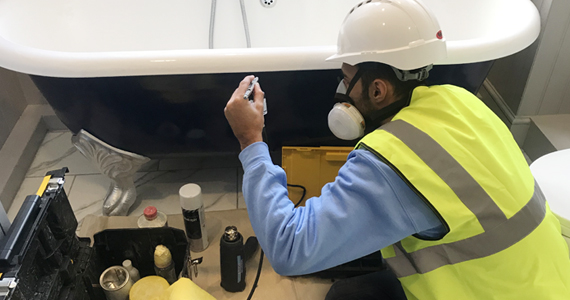
Is your bath in need of re-enamelling or resurfacing? When your bath is dull, sticky, or chipped, restoring it completely is the ideal fix. With Surface Doctor Craigmillar, your bath can be restored to a brand-new condition without the mess or hassle of a full replacement. Give me a call now to learn more about how I can restore your bath to its best condition.
Bath resurfacing, or re-enamelling, is the process of spraying a new enamel surface onto your bath, giving it a fresh look. The process is carried out directly in your bathroom, so no disruption to your bath installation or plumbing. This high-quality enamel paint hardens in just 24 hours, so you can enjoy your bath again the very next day. I’ll also take care of any chip or scratch repairs as part of the process, ensuring a smooth, flawless surface before the new enamel is sprayed. Whether it's a cast-iron, metal, or acrylic bath, I can restore it to a like-new condition. It only takes a day to do this procedure, which is much faster and cheaper than replacing your bath. You can trust my bath resurfacing, which comes with a 12-month guarantee.
In this day and age, it is so easy to buy something new and throw away the old one rather than trying to have it repaired or restored. With baths, it's actually not that easy to get rid of the old one. With cast-iron baths, the removal process requires breaking them apart due to their weight, causing damage to your bathroom’s structure. While acrylic baths are much lighter and can be carried out more easily, it will still cause damage to the rest of your bathroom if you have it removed. Removing your bath means redoing the tiling, refitting taps, and possibly replacing flooring, making it a costly and disruptive process. Opting to restore your bath helps you avoid contributing to the large amount of construction waste produced every day. Many older homes feature metal baths that can last a lifetime with the right care. Resurfacing is a simple and effective solution for worn, chipped, or scratched metal baths, making them look new and strong again. Acrylic baths might not last as long as metal ones, but resurfacing them still provides impressive results. For individual repairs like chips and scratches, I color match the repair to your bath, but with re-enamelling or resurfacing, I use a fresh white enamel to respray the entire surface.
I only use top-grade materials, exclusively available for commercial use, to resurface your bath. You can’t simply apply regular white paint to resurface your bath. One of the crucial steps for effective resurfacing is applying an adhesive bonder to attach the new surface to your original bath. The specialized bonder I use provides the strongest and most lasting bond for bath resurfacing. I’ve trusted my preferred materials for years, knowing they consistently produce excellent, high-quality repairs.
There’s no need to remove your bath or deal with complicated transport, as all of my resurfacing work is done in-situ. My in-situ resurfacing allows me to complete the job within a day, so you’ll be back to normal quickly. Vitreous enamel is a specialized technique in which powdered glass is fused onto your bath at high temperatures in a kiln. Due to the high temperatures involved, vitreous enamel can’t be performed in-situ, and it’s becoming increasingly rare among companies.
Before resurfacing, I will first fix any chips and dents to ensure the surface is flat and smooth. The repairs for chips and dents are included in the overall process with no hidden charges. I can resurface most baths, so contact me today to see if I can restore yours in Craigmillar.
Correct maintenance ensures your bath resurfacing lasts 15+ years while preserving its showroom finish. The key principle: treat your resurfaced bath like a new car's paint - regular gentle cleaning prevents damage from accumulating.
Expert re-sealing every 3 to 5 years ensures superior protection, extending your investment significantly.
Cast iron bathtubs, valued for heat retention and durability, perform exceptionally well with expert resurfacing. These heavy fixtures, common in heritage properties, frequently feature worn enamel, rust spots, or dated colors. Our cast iron bath resurfacing process starts with removing damaged enamel and treating any corrosion. Specialist primers designed for ferrous metals guarantee perfect adhesion. This coating reproduces the original enamel's depth and lustre while providing enhanced durability. Many cast iron bathtubs are irreplaceable period features - resurfacing preserves their period value while restoring functionality. The process costs between £350-£550, compared to £5,000-£12,000 for equivalent cast iron replacement.
Acrylic baths dominate modern bathrooms but experience scratching, yellowing, and chemical damage with age. Acrylic bath resurfacing requires specific techniques as standard coatings don't adhere properly to plastic substrates. We use specialised acrylic bonding agents that create chemical fusion between existing and new surfaces. The resurfacing process eliminates scratches, restores the color, and includes UV inhibitors preventing future yellowing. Thermal cracks common in acrylic tubs get flexible repairs that accommodate thermal expansion. Many customers opt for colour changes when resurfacing, replacing dated biscuit or almond finishes to contemporary white or grey. Costs run £250-£400, delivering dramatic transformation at a fraction of replacement expense.
Steel bathtubs, found in homes constructed 1950-1990, combine the durability with reduced weight and lower cost. However, their thinner enamel coating chips more easily, exposing the steel that quickly oxidizes. Steel bath resurfacing tackles these vulnerabilities through thorough rust treatment and application of thicker coating application. We transform any existing rust into protective compounds, seal the treated areas, and apply primer specifically formulated for steel. This creates a finish that's more durable than the original enamel. Steel tubs often feature dated colors like avocado or harvest gold - updating them to modern aesthetics while avoiding replacement costs of £1,500-£3,000.
Fiberglass bathtubs provide affordability but experience fading, cracking, and surface degradation within 10-15 years. The gel coat protecting the fiberglass substrate becomes increasingly porous, creating a rough, stained surface that can't be cleaned. Fiberglass bath resurfacing totally refreshes these deteriorated surfaces employing flexible coating systems which accommodate substrate movement. We repair characteristic cracks typical of aged fiberglass, repair any structural damage, and apply new gel coat-like finishes. The finished tub frequently surpasses the original quality, with improved chemical resistance and easier maintenance. From £275-£425, resurfacing costs significantly less compared to the £1,200-£2,500 needed for fiberglass tub replacement including installation costs.
Professional bath resurfacing commences with thorough preparation to ensure coating durability. Skilled technicians protect adjacent areas using professional masking, covering tiles, fixtures, and flooring. The tub undergoes intensive cleaning using industrial cleaners, removing soap residue, body oils, and mineral buildup that inhibit adhesion.
Surface etching produces mechanical adhesion via controlled abrasion or chemical etching. This technique opens the substrate's pores, enabling primers to penetrate effectively. Different materials need specific etching methods—cast iron needs aggressive mechanical abrasion, while acrylic needs gentler chemical etching to avoid damage.
Identifying repairs and preparation occur simultaneously. Skilled technicians identify all chips, cracks, and damaged areas for treatment. Rust spots receive special attention, requiring thorough removal and chemical conversion before coating application. This thorough preparation distinguishes quality resurfacing from DIY attempts that fail early.
Application phase requires controlled conditions for optimal results. Expert equipment monitors temperature and humidity, modifying ventilation to ensure ideal curing conditions. Primer application establishes the foundation layer, bonding chemically to the prepared surface while providing adhesion for subsequent coats.
Several color coats create the finish to a specified thickness, typically 0.5-1mm total. Each coat needs to partially cure before applying the next layer. High-quality spray equipment guarantees even coverage avoiding runs, sags, and orange peel. A final clear coat delivers chemical resistance and maintains long-term gloss.
Damage work blends seamlessly into resurfacing. Chips and dents are filled with catalysed compounds color-matched to the surrounding surface. These repairs cure to identical hardness, avoiding future problems at the repair boundaries. Structural cracks get reinforced with fiberglass mesh or carbon fiber, distributing stress across a larger areas.
Surface flaws like scratches and signs of wear are fixed through gradual sanding and filling. This generates uniform surface texture before the coating is applied. Professional technicians guarantee repairs remain invisible once resurfacing is complete, even with direct lighting that reveals amateur resurfacing.
Correct curing affects bath resurfacing durability and appearance. Initial set takes place within 2-4 hours, but full cure requires 24-48 hours depending on coating type and conditions. During this period, the coating goes through chemical cross-linking, developing its final hardness and chemical resistance.
Temperature and humidity control throughout curing avoids issues like blushing, cratering, or poor adhesion. Experienced technicians supply thorough aftercare guidance to ensure ideal cure conditions. This includes ventilation needs, temperature control, and keeping away water contact throughout the curing process.
Final inspection occurs after complete curing, checking for any issues that need attention. Quality resurfacing should have uniform gloss, even color, and smooth finish comparable to new baths. Any minor issues are corrected before service completion.
Edinburgh Castle - Historic fortress and national monument
Royal Mile - Famous historic street in city centre
National Museum of Scotland - Major museum with free admission
Bath Resurfacing Expenses: Professional bath resurfacing generally costs between £250 and £550 determined by tub type, size, and condition. Standard acrylic tub resurfacing starts at £250-£350. Cast iron bath resurfacing costs between £350 and £550 due to extra preparation needed. Damage repair adds £50-£150 depending on severity. Changing the colour include no extra charge. Non-slip treatments add on between £40 and £75. Travel costs may apply for out-of-area locations.
Replacement Expenses: Bathtub replacement comes in at £2,000-£8,000 total. Standard acrylic tubs start at £150-£400, but installation costing £800-£1,500. Cast iron tubs cost between £1,500 and £5,000 plus £1,000-£2,000 installation. Removal and disposal come to £200-£400. Plumbing changes often required, costing £300-£800. Retiling around the new tub comes to £400-£1,000. Possible floor reinforcement for heavier tubs adds £500-£1,500. Building regulations compliance might require extra work.
Cost Savings: Bath resurfacing removes various hidden costs associated with replacement. No skip hire (£150-£300). No plumber required (£200-£400 daily). No tiler needed (£200-£350 per day). No building control fees (£200-£400 costs). No temporary bathroom arrangements needed. No water damage risk during installation. No uncovering additional problems like rotten joists or asbestos. No time off work needed - the work completes while you're out. These hidden savings frequently double the advertised costs of replacement.
Financial Benefits: Work out the cost-per-year revealing bath resurfacing's superior value. A £400 refinish lasting 12 years comes to £33 annually. A £4,000 replacement with a lifespan of 20 years comes to £200 annually. Even high-end £550 refinish costs just £46 yearly over 12 years. Factor in disruption, convenience, and opportunity costs - resurfacing delivers outstanding value. Numerous resurfaced baths exceed their expected lifespan with proper care, further enhancing cost-effectiveness.
Re-enamelling or resurfacing a bath will take about 5-7 hours to complete. Protecting the surrounding areas by masking is an important step that takes time to ensure no overspray damages surfaces. It’s essential to protect surrounding surfaces, as overspray could cause damage. If your bath has chips or dents, they must be filled and repaired before resurfacing to ensure a smooth result. This can sometimes make the process take a bit longer than if there was no damage to fill.
Having resurfaced baths for many years, I have the expertise to make your bath look brand new again. Re-enamelling will give your bath a fresh, new look and feel, making it look like new again.
Having your bath resurfaced instead of replacing it will save you money, time, and is environmentally friendly. Restoring your bath helps minimize environmental impact by preventing additional waste in landfills. I repair chips, cracks, and scratches as part of the resurfacing process, ensuring a smooth finish.
The materials I use are of the highest quality, which you won’t find at your local DIY store for DIY bath painting. I have been using the same materials for the last 10 years, so I know that they work every time and will produce a lasting result.
How durable is bath re-enamelling?
The newly resurfaced surface will stay durable and shiny for many years to come. I’ll show you the best cleaning techniques to maintain the shiny and smooth finish of your bath. For your peace of mind, all of my work comes with a 12-month guarantee.


Hear from my satisfied customers about their bath restorations:
★★★★★
4.9/5 Average Rating
1000'S
Verified Reviews
98%
Would Recommend
Grace Morgan
Craigmillar, EH16, City-of-Edinburgh
Bath Type: Enamel | Service: Chip Repair & Resurfacing
Lauren Anderson
City-of-Edinburgh
Bath Type: Enamel | Service: Resurfacing & Colour Change
Brianna Jenkins
City-of-Edinburgh
Bath Type: Presses Steal| Service: Chip Repair & Resurfacing
Florence Collins
Craigmillar, EH16, City-of-Edinburgh
Bath Type: Presses Steal | Service: Chip Repair & Resurfacing
1) Reach out for my professional opinion.
2) Send over pictures of the damage.
3) I’ll send your quote to you right away.
That’s all there is to it! I can handle all your repair needs in Craigmillar.
Surface Doctor Craigmillar is one of the leading hard surface repair companies in your area, so if you need a bath repair call me now on 0131 278 3890
Ready to help with your bath and sink repairs in the bathroom or kitchen. You can trust me to offer top-quality repairs. Call me today for any inquiries about what I can repair.
We serve Craigmillar and the surrounding areas of City-of-Edinburgh. Our team is local and ready to help with your repair.