Tell us about your Nork property — a 1930s semi-detached or detached house on the North Downs ridge, a post-war or 1960s–70s property, or a more recent house. Price confirmed from £195 by phone immediately. No forms, no waiting.
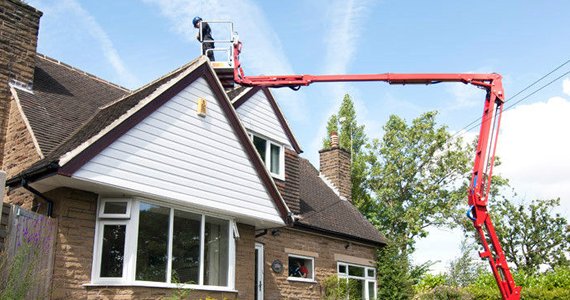
Our specialist assesses every element relevant to your property. 1930s stock: concrete or clay tile porosity testing, ridge and hip mortar condition, felt underlay via loft inspection, batten condition, lead flashings at chimney stacks. North Downs ridge aspect noted for wind exposure effect on mortar longevity. Flat roof sections assessed for membrane condition and drainage. Full chimney stack assessment.
Full written report with photographs, condition ratings, remaining service life estimates, and a prioritised costed action list. Key outputs for 1930s Nork properties: tile porosity verdict (re-roof within X years or manageable), ridge and hip mortar condition, felt underlay status, chimney assessment. Report within 48 hours. For buyers: costed schedules for negotiation.
Nork is a residential suburb on the North Downs chalk escarpment in Surrey, sitting on the ridge between Banstead to the north and Burgh Heath to the south. At roughly 150 metres above sea level, Nork stands above the Epsom and Ewell vale to the north-west — a position that gives its residents clear views across London on a clear day and gives its roofs above-average exposure to the prevailing south-westerlies that cross the North Downs without obstruction. The SM7 postcode covers Nork, Banstead, Woodmansterne, and Chipstead. Reigate and Banstead Borough Council is the local planning authority.
The housing stock in Nork is primarily 1930s semi-detached and detached houses, built as part of the inter-war suburban expansion that followed the extension of rail services to Banstead and the wider North Downs commuter belt. These properties were constructed in the characteristic Surrey style of the period: brick construction, hipped or half-hipped roof profiles, and concrete or clay plain tile roofing. Some of Nork’s older houses still carry their original plain clay tiles from the 1930s; the majority have been re-roofed at some point, most commonly in concrete interlocking tile. There is also a body of post-war infill and 1960s–70s detached houses, typically with concrete interlocking tile roofs from their period of construction.
The maintenance question that dominates roofing assessment across Nork’s housing stock is straightforward but consequential: where are these concrete tile roofs in their service life? Concrete tile has a design life of roughly 50 to 60 years. The oldest Nork properties date from the late 1920s and 1930s, meaning their roofs — whether original or re-roofed at some point in the post-war period — are now in a range where end-of-life assessment is the critical question. End-of-life concrete tile porosity is the defining failure mode: tiles absorb moisture throughout their depth rather than shedding it, the felt underlay below becomes saturated, and timber battens and rafters begin to decay — all before any external sign reaches ceiling level. A roof that looks intact from the garden can have a felt underlay that has been wet for two or three winters and battens showing early decay.
The distinction between a concrete tile roof that needs maintenance — ridge mortar relaying, hip mortar attention, minor repairs — and one that needs full replacement is the most important output of a specialist survey for Nork homeowners. Ridge mortar repair on a typical 1930s Nork semi costs £500–£1,500. A complete re-roof costs £8,000–£15,000 or more. Specialist assessment with tile porosity testing and loft inspection of felt and batten condition provides a clear recommendation: manage with maintenance, or plan re-roofing within a defined window.
Nork’s North Downs ridge position is a real but specific factor in that assessment. South-west and west-facing roof slopes on Nork’s ridge are exposed to the prevailing weather at elevation, and ridge mortar on these aspects weathers faster than the equivalent product in a sheltered lowland street. A 1930s Nork semi on an exposed ridge slope with a south-west-facing roof will typically need ridge mortar attention earlier in its service cycle than the same-age property in a sheltered Epsom cul-de-sac. Our surveys assess mortar condition in the context of the property’s elevation and aspect, not just its age in years.
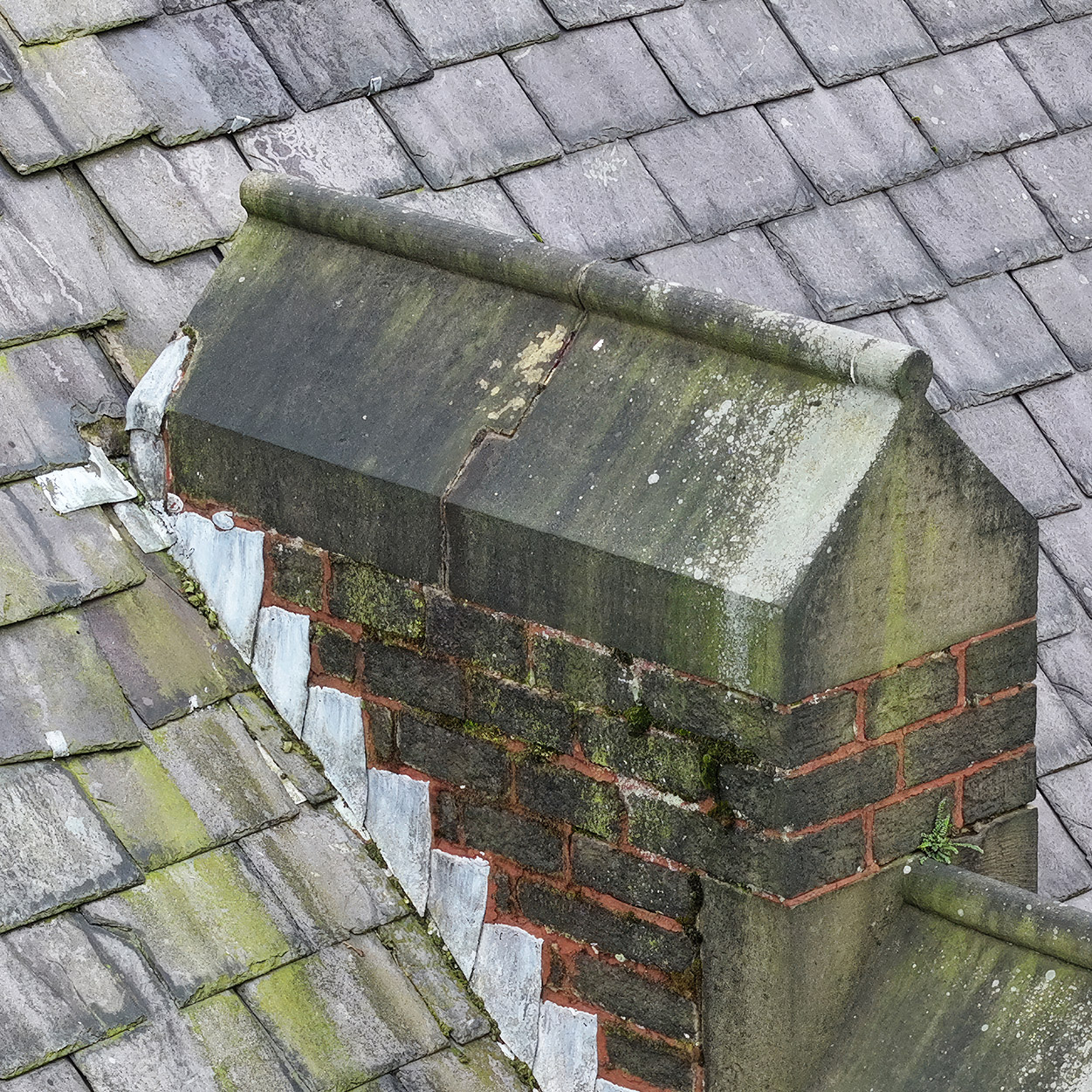
Most of Nork’s 1930s semis also have chimney stacks — often one on the party wall and one on the gable end. At 85–95 years old, chimney stack mortar, chimney cap condition, and lead flashing condition at the stack abutment are standard assessment items. Chimney-related water ingress — into chimney breasts in upstairs rooms or at ceiling level — is among the most common roofing complaints on inter-war Surrey housing, and on Nork’s exposed ridge slopes it tends to develop faster than in sheltered locations.
Nearby Areas: 1930s inter-war semi surveys also across Banstead and Tadworth. Wider North Downs ridge coverage at Coulsdon. Epsom vale properties at Epsom. Reigate and Banstead Borough surveys at Reigate.
Nork’s 1930s housing stock has reached the age where the maintenance question — repair and manage, or plan re-roofing — is active for most homeowners. The difference between those two paths is measured in thousands of pounds. Tile porosity testing and loft-level inspection of felt and batten condition is the only way to answer it reliably. That is what our surveys do: establish the actual condition of the roof system, not just the surface appearance, and give you a clear recommendation with costs attached.
A couple purchased a 1934 semi-detached house in Nork for £495,000. The homebuyer survey noted “concrete tile roof in generally fair condition. Some weathering evident to ridge mortar on north slope. Recommend monitoring and periodic repointing as required. No immediate action necessary.” No specialist roof survey was commissioned before exchange.
Year 1: Winter weather brought a damp patch to the corner of the main bedroom ceiling, tracing to the chimney breast. A roofer attended and repointed the chimney cap and stepped flashings. Cost: £580. The damp patch dried out over the following weeks.
Year 2: The damp patch reappeared at the same location the following winter. A second roofer attended, repointed the north-slope ridge section, and resealed the flashing. Cost: £490. The patch dried but returned again the following autumn.
Year 3: A specialist survey was commissioned after the third winter of recurring damp. Findings: the ridge mortar failure was genuine and had been correctly identified, but it was a symptom rather than the root cause. Tile porosity testing on the north slope revealed that the concrete tiles had reached end-of-life — moisture was penetrating throughout the tile depth and saturating the 1970s-era felt underlay beneath. Loft inspection confirmed the underlay was perished in two sections on the north slope, with early-stage timber staining on four rafters. The north-slope ridge mortar was failing faster than it should because moisture was entering from above through porous tiles, not because the mortar itself was unusual. Re-roofing of the north slope — including new tile, breathable membrane, battens, and ridge — was required: £5,500–£7,000. The south slope tiles tested at the borderline of porosity; likely to require re-roofing within 3–5 years: budget £5,000–£6,500.
What a Specialist Survey Before Purchase Would Have Found: “1934 semi-detached, concrete tile re-roof estimated 1970s. North slope tile porosity testing indicates tiles at end of service life — moisture penetration throughout tile depth confirmed. Felt underlay likely perished on north slope given tile age and porosity; loft inspection required to confirm. North slope re-roofing required within 12–24 months: budget £5,500–£7,000. South slope tiles at borderline porosity — monitor; likely re-roofing within 5 years: budget further £5,000–£6,500. Recommend negotiating on the basis of north-slope re-roofing as a condition of purchase or agreed price reduction.”
Survey cost: from £195. Two rounds of ineffective patch repairs totalling £1,070 before the root cause was diagnosed. The specialist survey before purchase would have identified the end-of-life tile condition and given the buyers a clear negotiating position.
Roof surveys for Nork properties start from £195. Whether a 1930s semi where the critical question is tile porosity and felt underlay condition on a roof now 50–90 years old; a post-war or 1960s property approaching the same age threshold; or a pre-purchase survey where you need a clear re-roof vs maintenance verdict before exchange — call 07833 053 749 for an exact price confirmed immediately. Report within 48 hours.
On a Nork 1930s semi worth £400,000–£600,000, the difference between a roof that needs £1,000 of ridge mortar attention and one that needs £12,000 of re-roofing is not visible from ground level. It requires tile porosity testing and a loft inspection. Independent specialist assessment provides that verdict clearly, with no financial interest in which way it goes. No repairs sold — honest assessment only.
The central roofing question on any 1930s Nork semi or detached house is whether the concrete tile is still shedding water reliably or has reached end-of-life porosity. This cannot be established from a homebuyer survey, which observes the roof surface from ground level without tile porosity testing or loft inspection. Specialist pre-purchase assessment gives you a clear re-roof timeline and budget before exchange — either confirming the roof has useful life remaining, or identifying a negotiating point worth thousands of pounds.
Damp patches at chimney breasts or ceiling level in 1930s Nork properties that return after repointing are frequently caused by end-of-life tile porosity on the slope above, not by the chimney or ridge mortar that a roofer has attended to. Water enters through the porous tile body, saturates the felt, and appears at the ceiling well away from where the tiles are failing. Specialist assessment identifies whether the root cause is tile porosity, chimney flashing failure, ridge mortar failure, or a combination — and provides a specification that actually resolves the problem.
If a roofer has told you that you need a full re-roof, independent specialist assessment before commissioning the work is straightforward due diligence. Our surveys establish whether tiles have actually reached end-of-life porosity across the whole roof or whether re-roofing of one slope and maintenance of another is the appropriate and less costly programme. We have no interest in which way the answer goes — we are not quoting for the repair work.
Before investing in an extension, loft conversion, or significant renovation on a 1930s Nork semi, understanding the remaining service life of the existing roof is essential capital planning. Re-roofing after an extension is considerably more expensive and disruptive than before. Our pre-works surveys give you the roof condition baseline before commitment to the wider project.
The 1930s semi stock across Nork, Banstead, and Woodmansterne is at a broadly similar age and presents consistent maintenance questions across a portfolio. Professional survey documentation provides the re-roof timeline and maintenance schedule for each property, satisfies insurance requirements, and supports planned maintenance budgeting rather than reactive emergency spend.
Ridge mortar failure on Nork’s North Downs ridge properties, particularly on exposed south-west-facing slopes, is common and normal at 85–95 years. The question is whether it is an isolated maintenance issue or a sign that the tiles beneath have also reached end of life. Our surveys assess ridge mortar condition in the context of the tile porosity below it, providing a clear recommendation rather than treating the two questions separately.
Concrete tile is manufactured from cement, sand, and aggregate with a factory-applied surface coating that sheds water. Over 50 to 60 years, the surface coating breaks down and the tile body itself becomes permeable — it absorbs water rather than shedding it. At this point, the felt underlay beneath the tiles is constantly wet rather than serving as an occasional backup. Perished felt no longer performs its secondary weatherproofing function, and the timber battens and rafters beneath it begin to decay. The tiles look intact from outside but the weatherproofing function has been lost through their depth. This is why porosity testing — assessing whether tiles shed or absorb water — cannot be done from a ladder or drone observation of the tile surface. It requires hands-on testing, supported by loft inspection to assess felt and batten condition.
Roof surveys start from £195. Call 07833 053 749 for an exact price confirmed immediately — no forms, no waiting.
Most Nork 1930s semi surveys take 2–3 hours including loft inspection. Detached properties with more complex rooflines or larger footprints take slightly longer. Full written report within 48 hours.
We cover Nork and the full SM7 postcode including Banstead, Woodmansterne, and Chipstead, and the adjacent KT17, KT18, CR5, and RH2 areas covering Epsom, Tadworth, Coulsdon, and Reigate.
For a 1930s Nork concrete tile property, no — and this is the most common gap our surveys fill. A homebuyer survey observes the roof from ground level, notes the general condition of the tile surface, and recommends specialist inspection if concerned. It does not carry out tile porosity testing, does not inspect the loft for felt and batten condition, and is not designed to answer the re-roof vs maintenance question with the specificity needed for a purchase decision or a repair plan. Specialist surveys do these things as their primary function.
Completely. We survey only — no repairs sold, no contractor referrals. Our assessments are the basis for your decision, not the start of a sales process.
Nork sits at the desirable end of the Banstead and North Downs commuter belt, valued for its elevated position, views across the Surrey and London skyline, and the quiet residential character of its 1930s streets. Semi-detached houses in Nork typically trade between £400,000 and £600,000; detached properties range from £550,000 to £800,000+. The combination of high property values and 85–95 year old concrete tile roofs creates a straightforward financial case for specialist pre-purchase assessment: the survey cost is negligible relative to the purchase price, and the gap between what a homebuyer survey identifies and what specialist assessment reveals on an end-of-life concrete tile roof is regularly measured in five-figure re-roofing programmes.
For existing Nork homeowners, the same logic applies from a different direction. Commissioning a re-roof that was not yet needed is as costly a mistake as failing to commission one that was. Independent specialist assessment gives you the honest answer — extend with maintenance, plan re-roofing within two to three years, or re-roof now — without the financial interest that a roofing contractor bringing you a quote inevitably has.
Reigate and Banstead Borough Council is the planning authority for Nork. While most re-roofing works on standard residential properties do not require planning consent, any works affecting the character of a property in a conservation area or on a listed building require prior consent. Nork itself does not have a conservation area designation, but properties at the Banstead village boundary may be affected.
Nork, Banstead village, Woodmansterne, Chipstead, and all residential streets throughout the SM7 postcode area
Banstead • Coulsdon • Epsom • Tadworth • Reigate
SM7 (Nork, Banstead, Woodmansterne), KT17 (Ewell), KT18 (Epsom), CR5 (Coulsdon, Chipstead), RH2 (Reigate)
Whether you’re buying a 1930s Nork semi and need a clear tile porosity verdict before exchange; dealing with recurring damp that repointing has not resolved; weighing a re-roof quote against an independent second opinion; or planning capital maintenance on a North Downs ridge property where elevated exposure brings ridge mortar maintenance earlier than sheltered equivalents — specialist assessment gives you the specific facts, not a ground-level impression.
Call 07833 053 749 now. Price confirmed from £195 by phone immediately. Detailed written report including porosity assessment, loft inspection findings, ridge and chimney condition, and a clear re-roof vs maintenance recommendation within 48 hours.