
Tell us about your Ninfield property — a 16th or 17th century farmhouse or cottage with handmade plain clay tile and lime mortar, a Victorian or Edwardian property in the village, or a mid-20th century bungalow or detached house. Price confirmed from £195 by phone immediately. No forms, no waiting.
Our specialist assesses every element specific to your property era. Old cottages and farmhouses: handmade tile condition, lime mortar cohesion at ridge and verge by probing, lead flashing at chimney stacks, Low Weald clay ground movement effects on mortar joints. Victorian and Edwardian: plain clay tile or slate, chimney pointing, lead flashings. Mid-20th century: concrete tile porosity testing, felt underlay via loft inspection, batten condition, ridge and hip mortar.
Full written report with photographs, condition ratings, remaining lifespan estimates, and a prioritised costed action list. Old properties: mortar cohesion, tile condition, correct repair specification (lime or hydraulic lime — not Portland cement). Victorian: lead and ridge assessed. Mid-20th century: tile porosity verdict and felt condition. Report within 48 hours. For buyers: costed schedules for price negotiation.
Ninfield is a Low Weald village sitting on a sandstone and clay ridge between the Pevensey Levels to the south-west and the Combe Haven valley to the south-east, roughly midway between Battle and Bexhill-on-Sea. The TN33 postcode covers a wide area of this part of East Sussex, including Battle, Catsfield, Crowhurst, and the farmland and woodland of the Low Weald transition zone between the coast and the Wealden ridge. Rother District Council is the planning authority for Ninfield and the surrounding area.
The oldest properties in Ninfield — farmhouses and cottages dating from the 16th and 17th centuries, standing along the village lanes and on outlying farmsteads — carry handmade plain clay tile roofs that are among the most durable roofing materials in existence when properly maintained, and among the most easily damaged by inappropriate repairs. Wealden handmade plain clay tile was formed from local clay, hand-pressed into wooden moulds, and fired at relatively low temperatures compared to modern machine-pressed tile. The result is a tile with a softer, more porous body, subtle variation in shape and thickness between tiles, and a surface that weathers to the warm orange and brown tones characteristic of the Low Weald vernacular. These tiles have been on their roofs for 300 to 400 years and are often structurally sound. What ages is the lime mortar at the ridge courses and chimney abutments that beds and points them.
Lime mortar on old Ninfield roofs erodes progressively under the action of frost cycling and rainwater. As it loses cohesion at ridge courses, the ridge tiles above it begin to shift and lift slightly; water enters the growing void and accelerates the process. At chimney abutments, lime pointing shrinks and cracks as it ages, allowing water to track behind the lead flashing and into the chimney breast below. These are standard maintenance items on old East Sussex clay tile properties — predictable and manageable when assessed and addressed on the correct cycle. The recurring problem is incompatible repair: when Portland cement mortar is used to repoint ridges or rebed tiles on these old soft-tile roofs, the hard, inflexible cement creates a rigid bond against a tile body that cannot expand and contract at the same rate. Under thermal cycling the cement cracks at the tile edge rather than accommodating movement; the crack holds water; frost drives it into the tile body, spalling the face. The repair causes the damage it was meant to prevent. Our surveys specify the correct material — natural hydraulic lime or lime putty mortar in appropriate specification — not just the repair required.
Low Weald heavy clay is the ground condition beneath Ninfield’s older properties. The clay shrinks during dry summers and swells during wet winters, generating slow cumulative differential movement that transfers into the structure of old farmhouses and cottages over decades. The practical effect on roofing: mortar at chimney abutments and verge courses is gradually worked open by structural movement, creating water ingress paths that develop independently of the condition of the tiles above them. Persistent damp at a chimney breast or a wall-head in an old Ninfield property that has not resolved after repointing is frequently caused by movement-driven joint failure at the abutment rather than a tile or flashing problem.
Victorian and Edwardian properties in the village carry plain clay tile or Welsh slate roofs with lead flashings at chimney stacks. The mid-20th century rural development around Ninfield — bungalows and modest detached houses built through the 1950s, 60s, and 70s — carries concrete interlocking tile roofs now at 50 to 70 years old. At this age, concrete tile porosity is the risk that matters: tiles that have absorbed moisture throughout their depth and can no longer reliably shed water, saturating the felt underlay before the problem reaches the ceiling below.
Nearby Areas: Low Weald plain clay tile and handmade tile surveys throughout the TN33 area at Bexhill, Hastings, and Robertsbridge. Adjacent village surveys at Crowhurst.
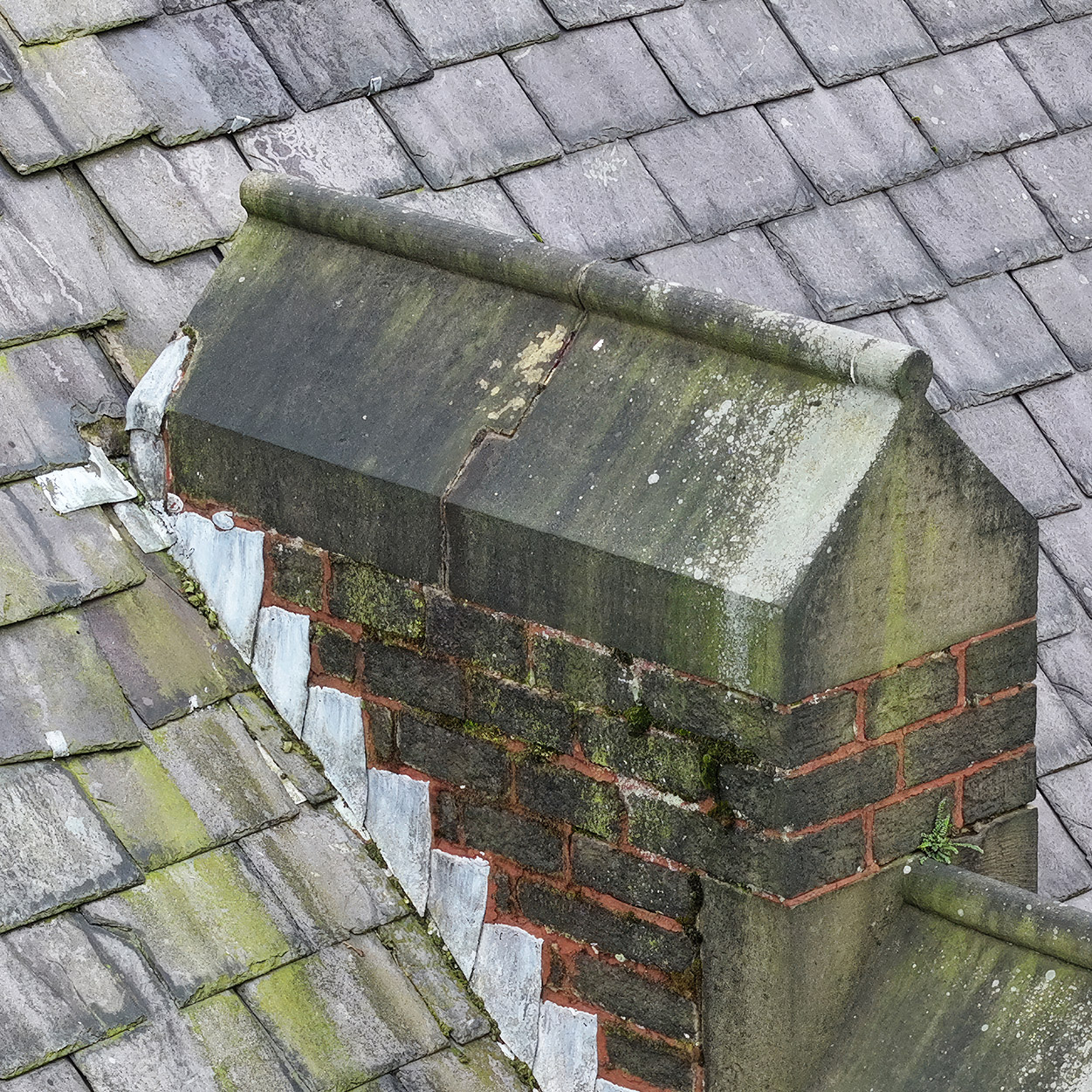


The handmade plain clay tile roofs of the Low Weald — the dominant traditional material across Ninfield and the surrounding TN33 area — require specific knowledge of how soft-fired Wealden tile behaves under lime mortar repair versus Portland cement, how Low Weald clay ground movement works open mortar joints independently of tile condition, and how to distinguish mortar that looks degraded but is still functional from mortar that has lost cohesion entirely. These are not general roofing assessments; they are specialist knowledge of a specific building tradition. Getting that right is what makes a Ninfield survey worth commissioning.
A couple purchased a 17th century farmhouse on the outskirts of Ninfield for £620,000. The property had its original handmade plain clay tile roof. The homebuyer survey noted “plain tile roof in fair condition. Some weathering to ridge mortar. Recommend periodic monitoring and localised repointing as required. Lead flashings to chimney in reasonable condition.” No specialist survey was commissioned before exchange.
Year 1: The buyers noticed some dark staining on the ridge tiles and called a local roofer who repointed the ridge on the main south-facing slope with ready-mixed cement mortar, also repointing around the chimney cap. Cost: £480. The ridge looked neat and the buyers were satisfied.
Year 2: The cement repointing at the ridge began to crack visibly along the tile edges — a fine but consistent crack running between the cement and the tile on both sides of each ridge tile. Some of the plain tiles immediately below the ridge on the south slope showed fine surface cracks that had not been visible before. A damp patch appeared at the chimney breast in the first-floor bedroom.
Year 3: A specialist assessment was commissioned. The findings were connected: the Portland cement mortar applied to the ridge had created rigid bonds against tile bodies that expanded and contracted at a different rate. Every thermal cycle — warm day to cool night, summer to winter — had worked the cement-tile interface, widening the crack and admitting water. The water was then held against the tile body by the tight cement, where it froze in cold weather. Frost cycling had spalled the face of seven tiles immediately below the ridge on the south slope, destroying their weathering surface. The remaining ridge mortar needed to be cut out entirely and relaid in hydraulic lime; the spalled tiles needed replacement (sourcing matched handmade tile from reclamation yards for a 17th century Wealden roof takes time and adds cost). The chimney breast damp traced to the chimney abutment, where cement repointing had cracked at the interface with the lead step flashing, admitting water behind the flashing. Lead flashing replacement and relaying in lime mortar: required. Total estimated programme: £4,200–£6,500 including reclaimed tile sourcing.
What a Specialist Survey Before Purchase Would Have Found: “17th century farmhouse with original handmade Wealden plain clay tile roof. Ridge mortar shows natural lime mortar weathering — cohesion testing indicates mortar is degraded in the upper 10mm but retains structural integrity. Requires relaying in natural hydraulic lime specification within 3–5 years: budget £1,200–£1,800. Lead step flashings at chimney stack: end-of-life assessment recommended on south elevation — replacement within 2 years: budget £700–£950. Critical note: tiles are original soft-fired Wealden handmade clay. Any ridge repointing must use lime mortar only — Portland cement application will cause frost spalling of tile faces within 2–3 winters. Recommend instructing any contractor accordingly as a condition of appointment.”
Survey cost: from £195. The £480 cement repointing job caused £4,200–£6,500 of remedial work. The specialist survey would have prevented it entirely by specifying the correct mortar before any work began.
Roof surveys for Ninfield properties start from £195. Whether an old farmhouse or cottage with handmade Wealden tile where lime mortar condition and previous repair compatibility are the critical questions; a Victorian village property where lead flashing and clay ground movement effects on chimney mortar need assessing; or a 1960s bungalow where concrete tile porosity is the approaching maintenance risk — call 07833 053 749 for an exact price confirmed immediately. Report within 48 hours.
On Ninfield’s old clay tile properties, a single incompatible cement repointing job can cause thousands of pounds of tile damage over two or three winters. Specialist assessment before any work is commissioned — whether you are buying the property or have owned it for years — establishes the correct specification and prevents the pattern of inappropriate repair causing the damage it was meant to fix. No repairs sold — honest assessment only.
For 16th or 17th century farmhouses and cottages with handmade plain clay tile roofs, the critical questions before exchange are: what is the actual condition of the lime mortar at the ridge and chimney abutments; have previous repairs been carried out in compatible lime mortar or in Portland cement (which will have caused or be causing tile damage); what is the condition of the lead flashings; and are there signs of Low Weald clay ground movement affecting chimney mortar joints? Specialist pre-purchase assessment provides costed answers on all these questions before commitment.
On old Ninfield clay tile properties, persistent damp at a chimney breast or wall-head that has not resolved after roofer visits is frequently caused by Low Weald clay ground movement opening abutment mortar joints from behind — a condition that surface repointing cannot address. Alternatively, Portland cement repairs applied in good faith by a previous contractor may be cracking and admitting water at the tile-cement interface. Specialist assessment identifies which mechanism is operating and provides the correct specification.
Before any contractor begins work on an old Ninfield handmade tile roof, specialist assessment establishes whether the existing mortar requires removal and relay or only localised consolidation, and — critically — what mortar specification is appropriate for the tile type. Providing a contractor with an incorrect specification, or allowing a contractor to use their default ready-mixed cement mortar, can cause expensive tile damage. Our pre-work surveys specify the correct material, not just the extent of work required.
Bungalows and detached houses built around Ninfield in the 1950s, 60s, and 70s carry concrete interlocking tile roofs now 50–70 years old. Specialist assessment establishes whether tile porosity has reached the threshold where tiles can no longer shed water reliably, whether felt underlay has been compromised by prolonged moisture, and what the realistic remaining service life is — giving you a planning window rather than an emergency.
A number of Ninfield’s older farmhouses and cottages are listed. Rother District Council requires technical assessment as part of listed building consent applications for roof repair or replacement. Our surveys provide the material condition evidence, proposed specification detail, and photographic record required for consent applications on listed properties.
Old handmade tile roofs in good condition with sound lime mortar have very long service lives — centuries, not decades. Specialist assessment establishes the actual maintenance position, identifies what needs attention in the next one to three years versus longer-term, and provides a realistic capital programme. For owners of old Ninfield properties, that planning certainty is the most valuable output of a specialist survey.
Handmade Wealden plain clay tile has a soft, slightly porous body that expands and contracts differently from Portland cement mortar under thermal cycling. When cement mortar is bonded to this tile body, every temperature change stresses the cement-tile interface. The cement is harder and less flexible than the tile; the stress concentrates at the bond line and cracks the cement there, typically within two to three winters. The crack holds water against the tile face; frost cycling then spalls the tile surface, destroying its weathering layer permanently. Lime mortar — softer, flexible, vapour-permeable — accommodates the same thermal movement without this stress concentration, which is why the original lime mortar has lasted hundreds of years where a cement repair fails within years.
Most Ninfield residential surveys take 2–3 hours on-site including loft inspection. Old farmhouses with complex rooflines, multiple chimneys, or tile-hung sections may take longer. Full written report with photographs, mortar condition ratings, and costed recommendations within 48 hours.
Roof surveys start from £195. Call 07833 053 749 for an exact price confirmed immediately — no forms, no waiting.
We cover Ninfield and the full TN33 postcode area including Battle, Catsfield, Crowhurst, Boreham Street, Penhurst, and surrounding Low Weald villages and farmsteads. We also cover Bexhill, Hastings, and the wider Rother District area.
By probing. Surface appearance of aged lime mortar can be misleading — mortar that looks weathered and grey may still have good cohesion, while mortar that looks intact may have lost cohesion in its lower depths. We probe systematically at ridge courses, verge bedding, and chimney abutments to assess cohesion throughout the mortar depth, not just at the surface. This is the critical assessment technique for old East Sussex clay tile properties that surface observation cannot replicate.
Completely. We survey only — no repairs sold, no referral arrangements with contractors. For Ninfield homeowners making decisions about lime mortar repair on old handmade tile roofs — where the specification matters as much as the extent of work — independent assessment is the foundation of getting the right job done in the right way.
Ninfield sits in a part of East Sussex that attracts buyers seeking rural character at prices below the High Weald to the north or the coastal towns to the south. Old farmhouses and cottages with handmade plain clay tile roofs on the village lanes and outlying farmsteads command £500,000 to £800,000+, depending on size, condition, and the extent of land. Victorian and Edwardian village properties range from £350,000 to £550,000. The mid-20th century bungalow stock on the village margins trades between £280,000 and £420,000.
For buyers of old Ninfield clay tile properties, the maintenance knowledge gap between a homebuyer survey and a specialist assessment is consistently measured in thousands. A homebuyer survey notes “ridge mortar showing weathering, periodic repointing recommended.” A specialist assessment notes “lime mortar cohesion adequate for 3–5 years, no Portland cement evidence — maintain in lime” or “previous cement repairs present on north slope, tile face spalling risk, remove and relay in hydraulic lime within 12 months.” The difference between those two assessments determines whether you are buying a property with a managed maintenance programme or one where an imminent repair programme has already been made more expensive by incompatible previous work. Pre-purchase specialist assessment is the straightforward way to know which you are buying.
Rother District Council is the planning authority for Ninfield. Listed building consent is required for works to listed properties, and a specialist technical assessment report is the standard evidence base for consent applications involving roof repair or replacement on listed buildings.
Ninfield village, Battle, Catsfield, Crowhurst, Boreham Street, Penhurst, Ashburnham, and surrounding Low Weald farmsteads and villages throughout the TN33 postcode
Bexhill • Hastings • Robertsbridge • Crowhurst
TN33 (Battle, Ninfield, Catsfield), TN39 (Bexhill), TN40 (Bexhill), TN38 (St Leonards)
Whether you’re buying an old Ninfield farmhouse and need to know whether the lime mortar is sound and whether any previous repairs used compatible materials; dealing with damp at a chimney breast that repointing has not resolved; planning ridge work and needing the correct mortar specification before instructing a contractor; or assessing a mid-20th century bungalow’s concrete tile for end-of-life porosity — specialist assessment gives you the specific facts for the specific property and material, not a generic surface inspection.
Call 07833 053 749 now. Price confirmed from £195 by phone immediately. Detailed written report with photographs, mortar cohesion ratings, repair specification, and costed recommendations within 48 hours. Same-day service often available across Ninfield and the TN33 area.
